



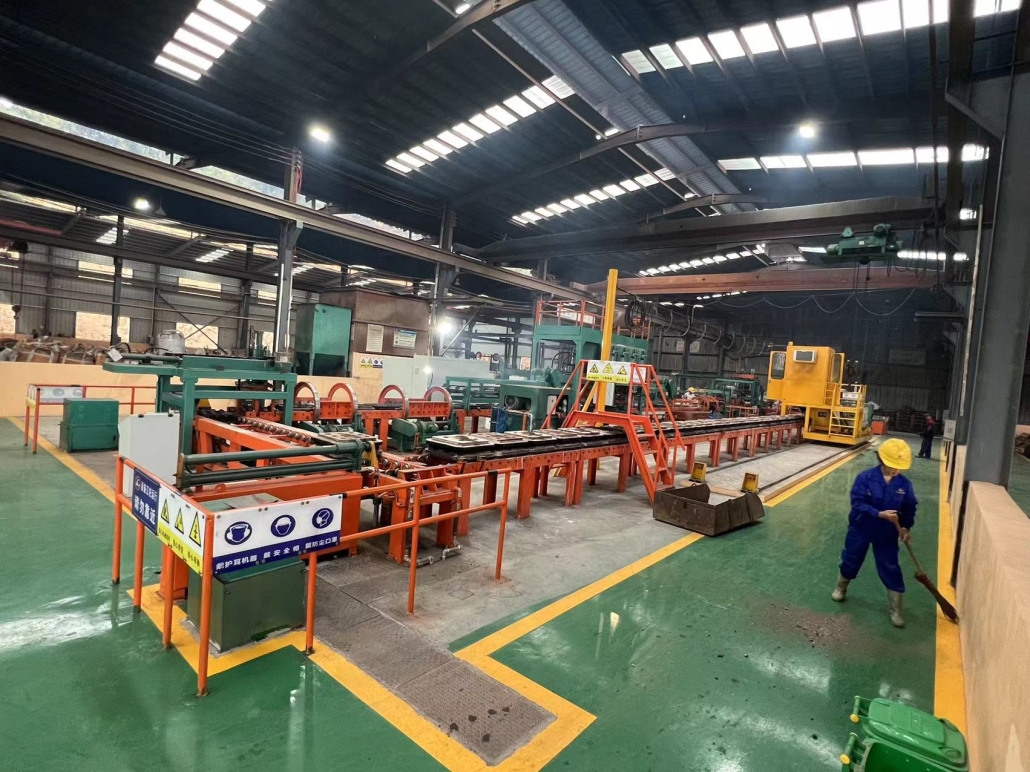
How to solve Common Technical Challenges in the Production of High-Chrome Grinding Media?
As products characterized by high hardness and exceptional wear resistance, high-chrome grinding media are widely utilized across industries such as mining, metallurgy, and building materials. However, during the production process—influenced by various factors including raw materials, equipment, and manufacturing techniques—a series of technical issues frequently arise. These issues directly impact both the quality of the grinding media and overall production efficiency. To address these challenges, implementing effective technical improvements and process optimizations is crucial for elevating production standards. This article analyzes the common technical problems encountered in the production of high-chrome grinding media and proposes corresponding solutions.
First, non-uniformity in raw material proportioning is a significant factor contributing to inconsistent grinding media quality. The performance of high-chrome cast balls relies heavily on the precise control of their chromium and carbon content. If there are excessive variations in raw material particle sizes or if mixing is inadequate, the resulting cast balls may suffer from density irregularities, porosity, or cracks. The solution lies in strictly controlling the raw material screening process, adopting advanced batching systems to ensure automated and precise weighing, and incorporating uniformity checks during the mixing stage to guarantee chemical composition consistency across every batch of raw materials.
Second, issues related to the melting and casting processes can also compromise the performance of the grinding media. If the melting temperature for high-chrome cast balls is either too high or too low, it can lead to structural non-uniformity within the ball, thereby negatively affecting its hardness and wear resistance. Furthermore, inconsistent casting speeds or improper mold temperature control can result in defects such as porosity and slag inclusions. Remedial measures include utilizing high-precision temperature-controlled melting furnaces and intelligent casting systems, optimizing temperature profiles, and strictly regulating casting speeds to ensure the molten metal uniformly fills the molds.
Third, insufficient heat treatment of the cast balls is another common issue. High-chrome grinding media require specific quenching and tempering processes to achieve optimal hardness and toughness. If the heat treatment temperature is too low or the duration is too short, the balls may fail to meet the required hardness specifications; conversely, if the temperature is too high or the duration is too long, the material may become brittle. Manufacturers should establish strict heat treatment protocols, employ advanced temperature-control equipment, and utilize hardness testing and microstructural analysis to ensure that the heat treatment results are consistently reliable.
Additionally, issues arising during the grinding and polishing stages can also impact the quality of the final product. If the surface of the cast balls lacks smoothness or retains burrs, it can adversely affect both their grinding efficiency and their operational service life. Solutions involve utilizing high-efficiency grinding media equipment—integrated with automated inspection systems—to grade, refinish, and surface-treat the spherical bodies, thereby ensuring dimensional precision and surface quality.
Finally, inadequate equipment maintenance can trigger production interruptions and result in defective products. A production line for high-chrome grinding media involves a diverse array of machinery—including melting furnaces, casting machines, and heat treatment furnaces—which, over prolonged periods of operation, are prone to wear, clogging, or control system malfunctions. Enterprises must therefore establish a regimen of regular maintenance and routine inspections, promptly replace wear-prone components, and provide operator training to enhance both the stability and safety of the production line.
By optimizing raw material formulations, refining melting and casting processes, enhancing heat treatment procedures, and perfecting equipment maintenance management, enterprises can effectively resolve common technical challenges inherent in the production of high-chrome grinding media, thereby elevating both product quality and production efficiency. As a leader in the industry, Ningguo Hexin remains at the forefront of the sector—distinguished by its advanced production facilities, meticulous process controls, and extensive technical expertise. The company is dedicated to providing clients with high-quality, high-performance grinding media ball solutions, thereby empowering various industries to boost their productivity and market competitiveness.

