STEP 4# HEAT TREATMENT PROCESS FOR GRINDING MEDIA
After balls separating and cleaning, grinding balls need to heat treatment. However, the different percentage of chrome, heat treatment process is not the same.
Types of Heat Treatment Process
For high chrome balls, Cr is over 10%; quenching is needed first, then tempering. For low-chrome balls, Cr below 10%, only large-sized balls need to be tempered. (Detailed process according to the client’s heat treatment technology.)
Also, for quenching, there are three methods: water, oil, and air quench. For grinding balls, the last two ways are the best. Moreover, for super high chrome balls, air quenching is preferred over oil quenching. But for 10- 18% Cr, oil quenching is the most popular.
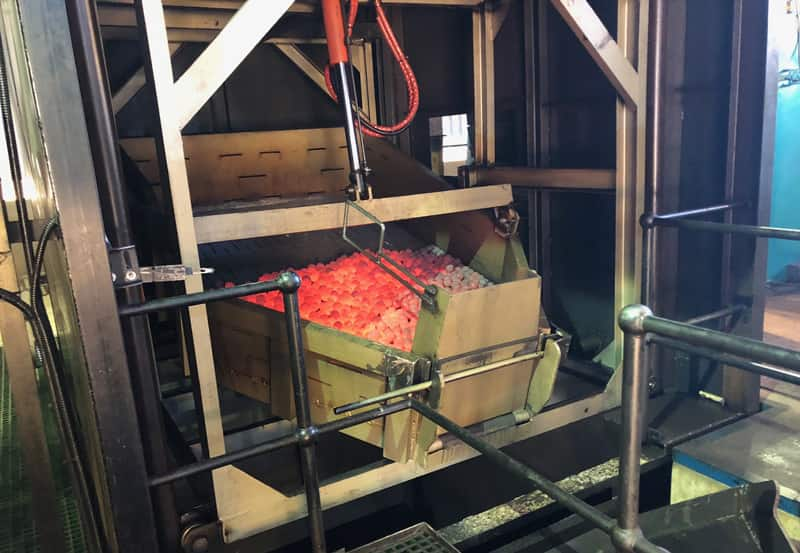
Quenching process: first heating the grinding balls up to the certain degrees in particular time, then quench directly to oil or air for several minutes.
Tempering process: heating the quenched grinding balls for a specific time in certain degrees.
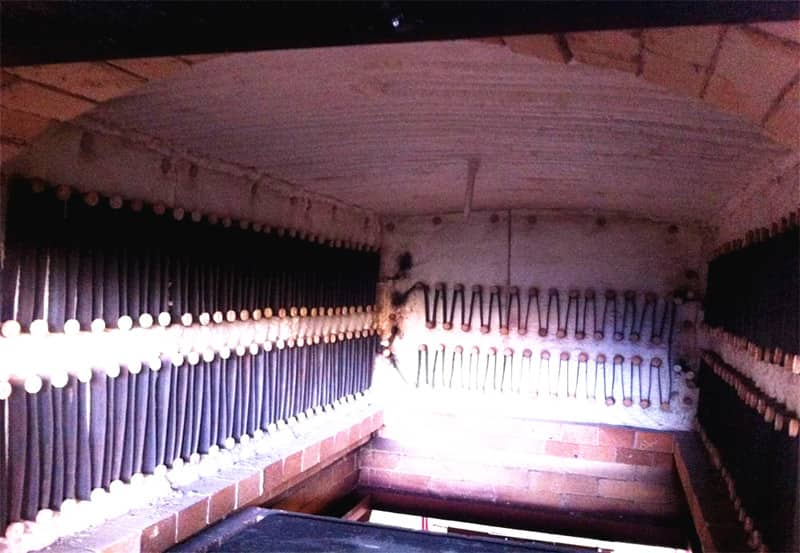
So, you can see that for both quench & temper, they have the same process: ‘Heating the Grinding Balls.’ The differences between them are only the heating temperature & and time. It explains why tempering and quenching can share the same furnace.
Types of Heat Treatment Plants
There are two different types of heat treatment machines.
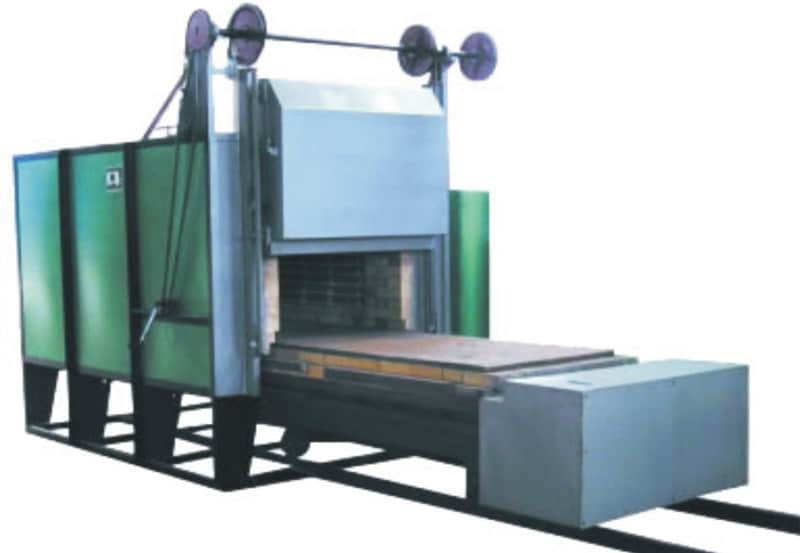
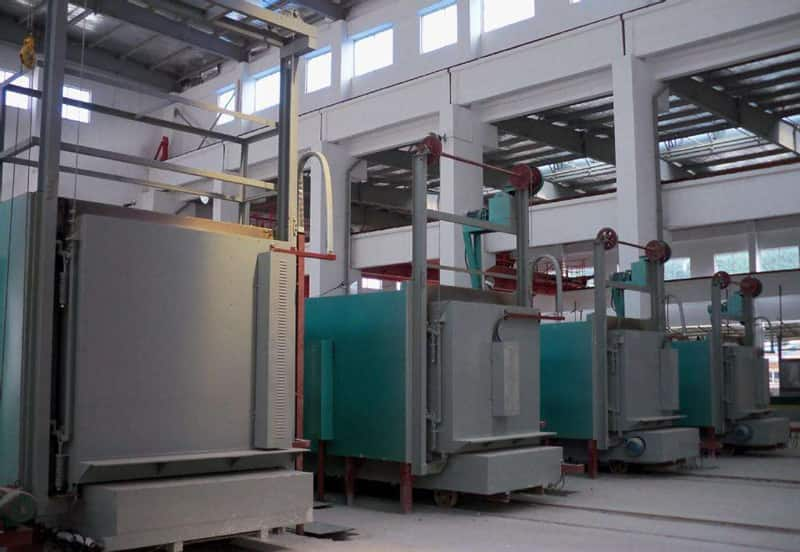
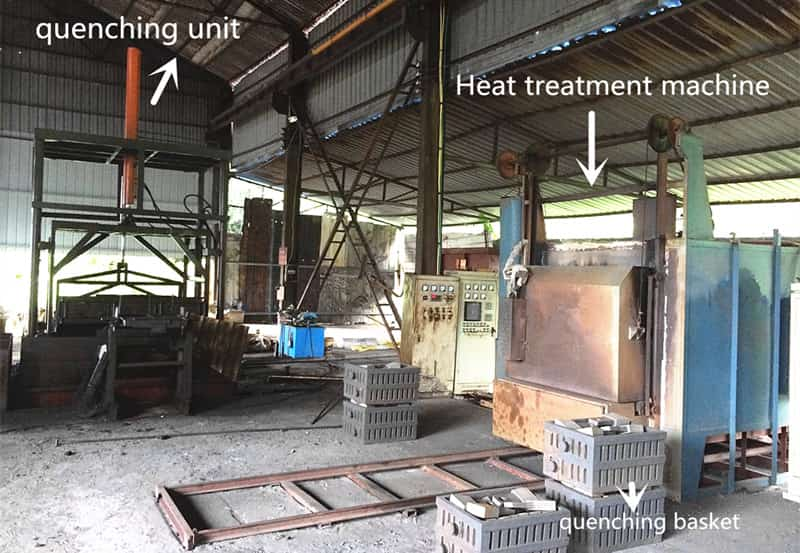
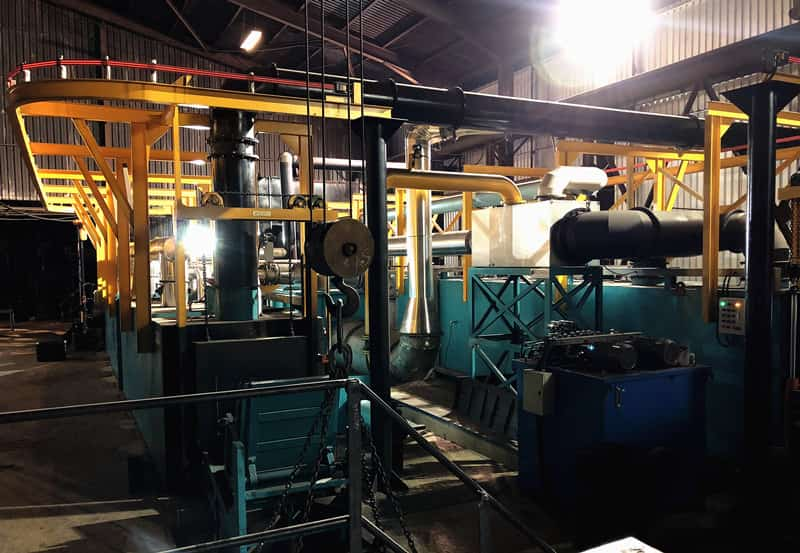
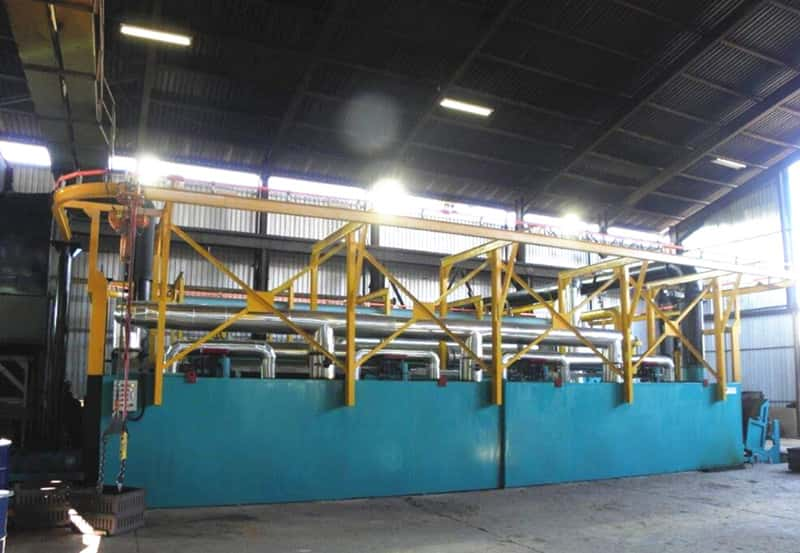
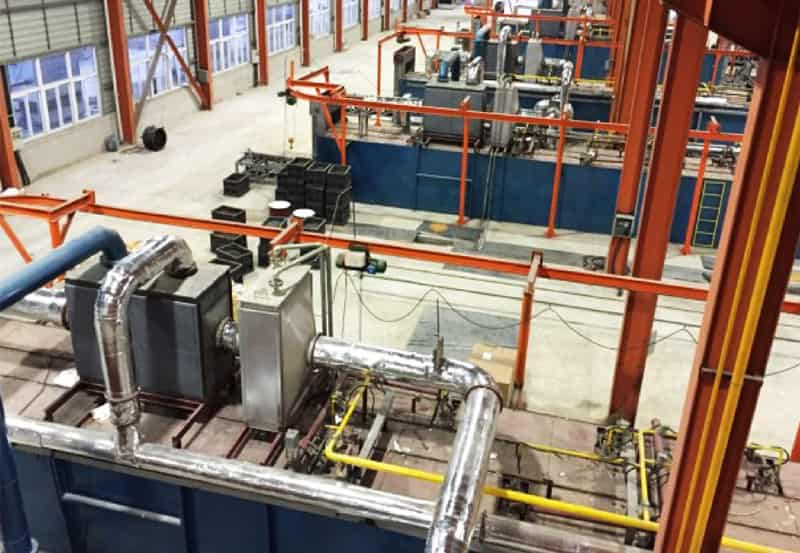
One is the car bottom type. This plant can process 4- 6 tons of grinding balls per day; the power is electricity; semi-auto type; investment costs are low.
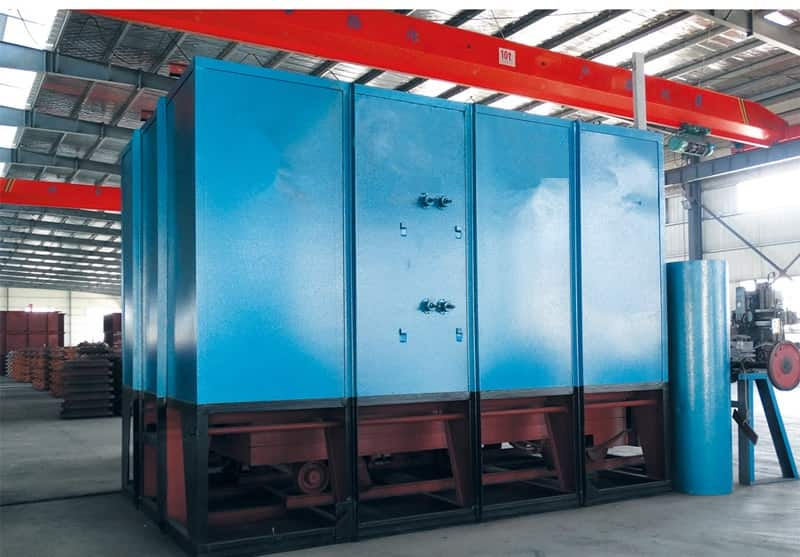
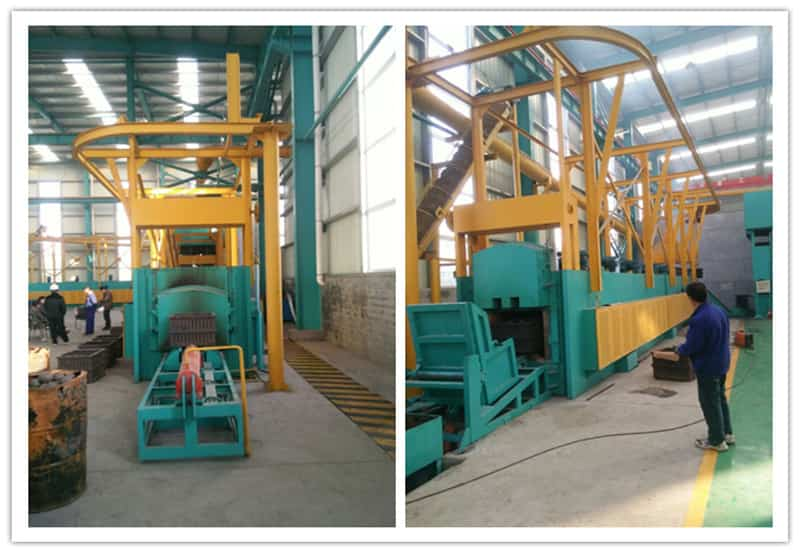
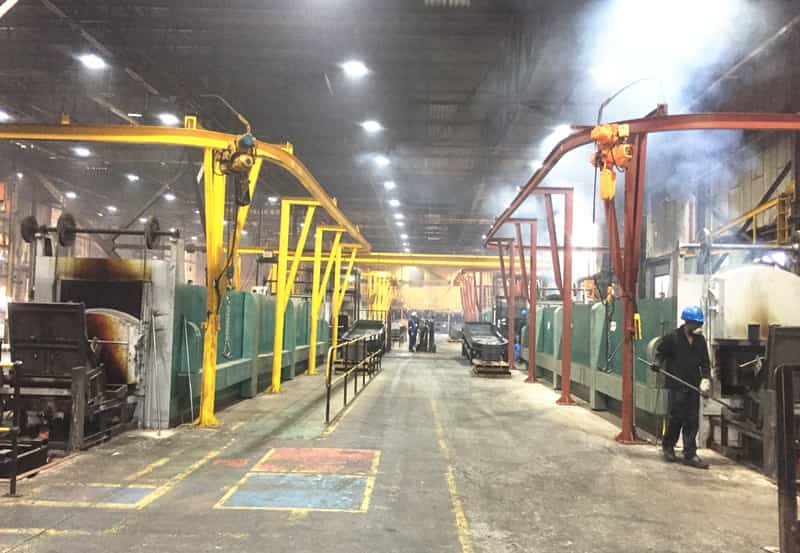
Another tunnel type is more suitable for higher daily productivity and can meet the requirements of 10tons to 30tons/day.
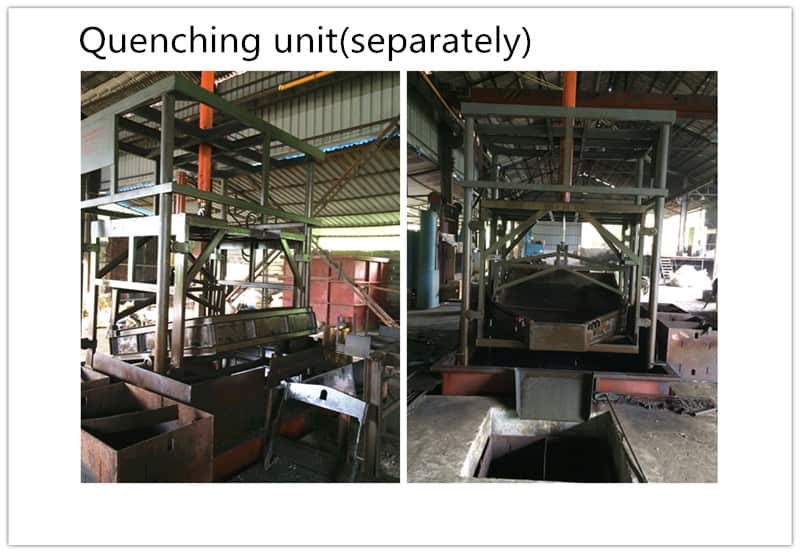
Please note that what we mean by the difference between the two types of furnaces is the difference between the heating furnace and not the quenching unit. The heat treatment yield is determined by the size of the heating furnace rather than the Quenching Unit. The quenching unit is the SAME.
Here are detailed descriptions of the two furnaces.