



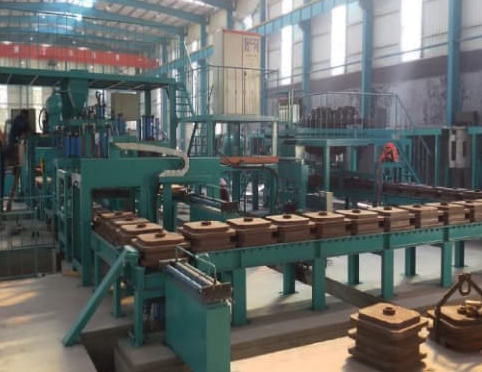
المعدات والعمليات الأساسية لخطوط إنتاج وسائط الطحن
As industrial sectors continue to demand ever-higher standards for product quality and production efficiency, grinding media production lines play a pivotal role across a wide range of industries. Whether in mining, chemicals, ceramics, or coatings and paints, the production of grinding media directly impacts the performance and quality of the final product. To achieve efficient and stable production, selecting the appropriate core equipment and optimizing production processes are absolutely essential. This article will provide a detailed exploration of the core equipment and process workflows involved in grinding media production lines, helping industry professionals understand how to enhance production efficiency and product quality.
What are the Main Equipment Components of a Grinding Media Production Line?
The core equipment within a grinding media production line includes ball mills, mixers, classifiers, dryers, and packaging machines, among others. Each of these machines performs a specific function, collectively ensuring the efficiency and stability of the entire production process.
Ball Mills: As the central component of a grinding media production line, ball mills are primarily used to grind raw materials down to the required particle size. Depending on specific requirements, ball mills can be categorized into dry grinding and wet grinding types, and they are widely utilized in the processing of materials such as ores, metal particles, and ceramics.
Mixers: Mixers are employed to uniformly blend raw materials with the grinding media, thereby ensuring the production of a homogeneous batch of grinding media. Different types of mixers are suited to different materials—such as liquids or solid particles—offering a high degree of adaptability.
Classifiers: Classifiers are used to sort the ground materials according to their particle size, ensuring that the final product meets specific size specifications. Classifiers are typically used in conjunction with ball mills; this combination helps to boost grinding efficiency while simultaneously reducing energy consumption.
Dryers: For raw materials with high moisture content, dryers serve to effectively remove excess water, thereby preventing the finished product from sustaining damage due to dampness during storage. By precisely controlling temperature and humidity levels, dryers play a crucial role in guaranteeing the consistent quality of the grinding media.
Packaging Machines: Serving as the final stage of the process, packaging machines package the finished grinding media, facilitating ease of storage and transportation. Modern packaging machines typically feature automated weighing and sealing capabilities, significantly enhancing overall production efficiency.
What is the Production Process Workflow for Grinding Media?
The manufacturing process for وسائط الطحن typically comprises several key stages: raw material preparation, mixing, grinding, classification, drying, and packaging. Optimizing each of these stages directly impacts the quality of the final product and overall production efficiency.
Raw Material Preparation: First, suitable raw materials—such as steel balls or ceramic particles—must be selected. These materials undergo rigorous screening and treatment to ensure their quality meets established standards.
Mixing: Different types of grinding media are blended uniformly with auxiliary materials. This mixing process must be executed at precise durations and speeds to prevent material inhomogeneity, which could otherwise compromise the effectiveness of subsequent grinding operations.
Grinding: The materials are ground using equipment such as ball mills to gradually reduce the raw materials to the desired particle size. During this stage, grinding duration and speed are adjusted based on the specific characteristics of the material to strike an optimal balance between grinding efficiency and energy consumption.
Classification: Following the grinding stage, the material undergoes particle size classification using a classifier. This ensures that only particles meeting the required specifications proceed to the next stage, while non-conforming particles are returned to the grinder for reprocessing.
Drying: If the material contains moisture, it is subjected to a drying process using a dryer to remove excess water. This step is crucial for preventing any adverse effects on the grinding media’s performance and shelf life.
Packaging: Finally, the dried and classified grinding media enter the packaging stage, where automatic packaging machines are used to perform quantitative packaging, thereby ensuring the consistency of both the product’s appearance and quality.
How to Select the Appropriate Grinding Media Equipment to Meet Diverse Production Needs?
Different production requirements impose varying demands on the selection of grinding media equipment. When choosing the appropriate machinery, the following factors must be carefully considered:
Material Characteristics: Different types of materials place different demands on the equipment. For materials with high hardness, the selected ball mill must possess superior wear resistance and higher grinding efficiency; conversely, for brittle materials, an agitator mill may be more suitable, as it minimizes the mechanical impact force exerted on the material.
Particle Size Requirements: The specific particle size requirements for the grinding media are a decisive factor in equipment selection. For products requiring a very fine particle size, it is essential to select equipment capable of delivering a finer grinding effect—such as high-efficiency ball mills or vibratory mills.
Production Capacity: Production capacity is another critical factor to consider when selecting equipment. Production lines with substantial output requirements necessitate the selection of high-capacity, high-efficiency equipment—such as large-volume ball mills and classifiers—to ensure the line operates with maximum efficiency.
Energy Consumption and Cost: Equipment energy consumption has a direct impact on production costs. Opting for energy-efficient machinery can effectively lower operating expenses; for instance, utilizing ball mills equipped with variable-frequency drive (VFD) technology allows for energy consumption to be adjusted dynamically based on actual operational loads.
How do Automation and Intelligent Technologies Enhance Efficiency in Grinding Media Production Lines?
Driven by advancements in industrial automation and intelligent technologies, grinding media production lines are increasingly incorporating automated and smart equipment. This integration plays a pivotal role in boosting production efficiency while simultaneously reducing labor costs.
Automated Control Systems: Through the implementation of PLC-based control systems, individual pieces of equipment within the production line can be fully automated. Operators need only configure parameters via a control panel, allowing the entire production process to run autonomously; this significantly minimizes errors associated with manual operation and reduces physical labor intensity.
In-line Monitoring Technologies: Modern production lines are frequently outfitted with in-line monitoring equipment capable of tracking critical parameters—such as product particle size, moisture content, and temperature—in real time. This data is transmitted via a data acquisition system to a central control hub, enabling real-time adjustments to production parameters and ensuring consistent product quality.
Intelligent Scheduling Systems: Leveraging advancements in big data and cloud computing technologies, intelligent scheduling systems can automatically regulate production pace and equipment loads based on production demands and operational status. This optimizes production workflows, prevents issues such as equipment overload or unnecessary downtime, and ultimately boosts overall production efficiency.
In the landscape of modern industrial manufacturing, the optimization and intelligent transformation of grinding media euqipments are continuously advancing. By adopting state-of-the-art equipment and refined manufacturing processes, manufacturers can achieve significant gains in production efficiency, reduce energy consumption, and ensure the stability of product quality. As technology continues to evolve, grinding media production lines will become even more efficient and intelligent, thereby meeting the diverse and evolving demands of the market. Ningguo Hexin remains committed to providing high-quality production solutions for grinding media, empowering various industries to enhance their production capabilities and strengthen their market competitiveness.

